Blog · November 5, 2026 · 10 min read
Goldendoodle Grooming Schedule: How Often to Groom and Brush, by Coat, Length, and Age
How often a Goldendoodle needs professional grooming and at-home brushing, broken down by coat type, haircut length, puppy coat change, and lifestyle. With a schedule table.
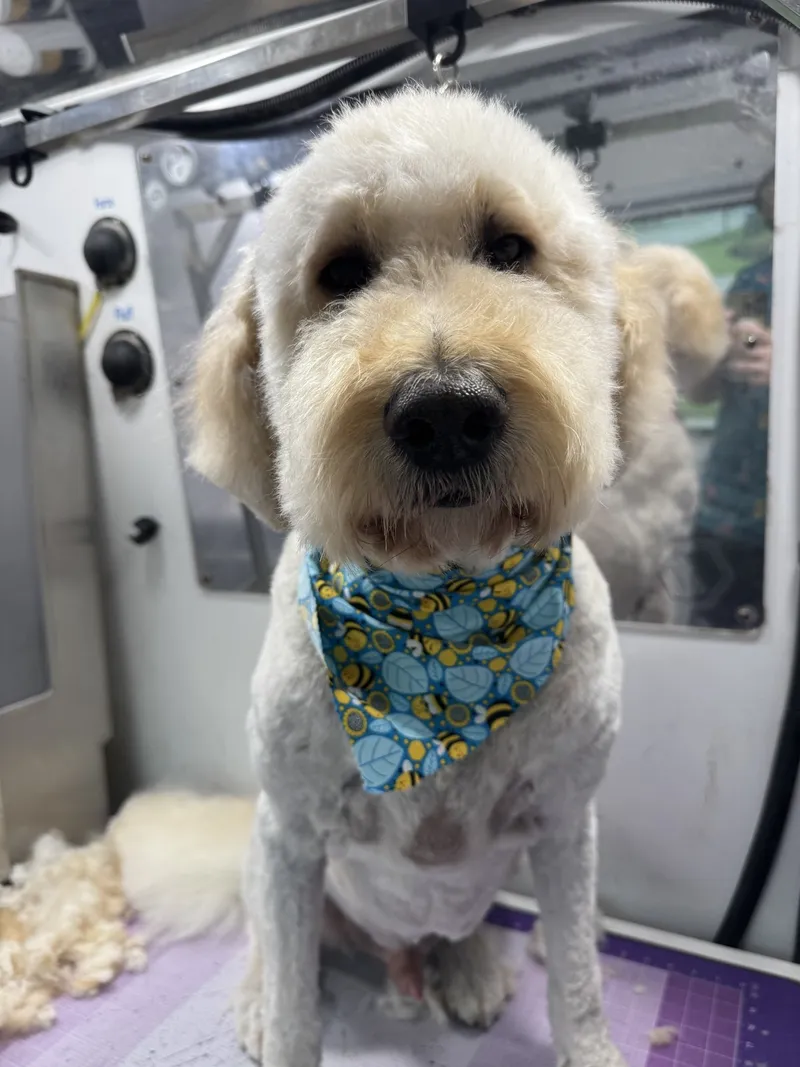
Most Goldendoodles need a professional groom every 4 to 8 weeks and brushing at home anywhere from twice a week to every day. Where your dog lands in that range comes down to four things: the coat type (curly, wavy or straight), the length you keep the haircut, the dog's age, and how it spends its days. A curly doodle in a long teddy bear cut that swims all summer sits at the demanding end. A straight-coated doodle in a short puppy cut sits at the easy end. Below is how to work out a realistic goldendoodle grooming schedule for the dog you actually have, plus a weekly at-home routine that keeps the coat in shape between appointments.
Why Goldendoodles mat in the first place
A Goldendoodle is a Golden Retriever crossed with a Poodle, and the coat can land anywhere between the two. What most doodles inherit from the Poodle side is hair that keeps growing instead of shedding out on a cycle. Hair that doesn't fall out has to go somewhere, so loose strands get caught in the hair around them. Add friction, moisture or a little dirt, and the caught hair knots into a tangle. Left alone, a tangle tightens into a mat.
Mats form from the skin outward. That's the part that catches owners off guard: a doodle can look fluffy and fine on top while a layer of felt is forming underneath. The usual trouble spots are the places where the coat rubs or stays damp: behind and under the ears, the armpits, the collar and harness line, the inside of the back legs, the tail and rear, and the feathering on the legs and chest. Feet mat easily too, especially between the pads.
Matting isn't a cosmetic problem. Welfare guidance from the ASPCA and USDA Animal Care describes mats pulling on the skin, trapping moisture and debris, hiding parasites and skin disease, and in severe cases restricting movement or cutting off circulation on a limb. A good schedule exists to keep your dog comfortable, not just cute.
Grooming frequency by coat type
Coat type is the single biggest factor in how much work a Goldendoodle takes. The Goldendoodle Association of North America (GANA) explains that curl and "furnishings" (the longer facial hair that gives doodles their beard and eyebrows) are controlled by separate genes, which is why two wavy parents can produce curly, wavy and straight puppies in one litter. The generation label (F1, F1b and so on) is a rough guide at best. Look at the dog.
Curly coat. Tight, dense curls close to a Poodle's. Sheds the least and mats the most. Loose hair has nowhere to go but into the curls around it, so tangles form fast and close to the skin. Plan on brushing to the skin most days and a professional groom every 4 to 6 weeks.
Wavy coat. The classic shaggy teddy-bear look, and the most common doodle coat. It tangles readily where the coat rubs, but it's more forgiving than a curly coat. Three or four thorough brushing sessions a week and a groom every 6 to 8 weeks keeps most wavy doodles in good shape at a medium length.
Straight (flat) coat. Closer to the Golden Retriever side, often with a true undercoat. These dogs shed more and tangle less, though the fine undercoat still packs behind the ears and in the feathering, and shedding season adds work. One or two brushing sessions a week plus a groom every 8 to 10 weeks is usually plenty, with extra brushing in spring and fall.
If you aren't sure which you have, a groomer can tell you in about ten seconds, and the honest answer sometimes is "curly on the back, wavy on the legs." Groom to the most demanding part of the coat.
Grooming frequency by haircut length
The second factor is the length you ask for. Every extra half inch is more hair to tangle and more time on the brush.
Puppy cut (short, roughly ½ to 1 inch all over). The lowest-maintenance style. A short, even clip with a tidy face and tail. At this length a wavy or straight coat can often go 8 weeks between grooms and get by with brushing twice a week, though the face, ears and feet usually need attention sooner than the body.
Teddy bear cut (medium, roughly 1 to 2 inches, rounded face). The look most people picture when they say "doodle." Plush enough to look soft, long enough to mat if neglected. Plan on a groom every 4 to 6 weeks and brushing three or four times a week, every time, including the legs and the underside.
Longer styles (2 inches and up). Beautiful and a genuine commitment. Daily brushing to the skin, a groom about every 4 weeks, and a willingness to go shorter if life gets busy. Long coats also collect burrs, mud and water, so they suit dogs that spend most of their time indoors.
If you're torn between two lengths, pick the shorter one and grow it out once you know you can keep up. Adding length over a few visits is easy. Rescuing a long coat that got away from you usually means starting over short.
The puppy coat transition
Goldendoodle puppies are born with a soft, fine coat that rarely mats. Then, usually somewhere between 6 and 12 months of age, the adult coat starts growing in. The change can take several months to finish, and it's the single most common time for a doodle to arrive at a groomer matted to the skin.
Here's why: the new adult hair is coarser and often curlier, and it grows up through the soft puppy coat. The two textures tangle around each other, and the matting happens fast and low, right at the skin. Owners who brushed twice a week with no trouble for months suddenly find felt behind the ears and in the armpits.
Two things help. First, book a first professional groom early, around 12 to 16 weeks once vaccinations allow, and keep appointments on a regular cycle before the coat change starts. A puppy that already knows the table, the dryer and the clippers handles the transition far better than one meeting them for the first time with a matted coat. Second, when you notice the texture changing, shorten your brushing interval to daily and comb-check the trouble spots every time. Many owners also take the coat shorter for the few months of the transition and grow it back out afterward.
Grooming frequency by lifestyle
Lifestyle is the adjustment on top of coat and length.
- Swimmers and water dogs. Water tightens tangles into mats, and a wet coat that air-dries in curls mats fastest of all. A doodle that swims regularly should be brushed and combed out after it dries, every time, and usually does best on a shorter cut and a 4 to 6 week groom cycle.
- Daycare and dog-park regulars. Play means slobber, rolling and other dogs' mouths on the ears, neck and legs. Those spots mat first. Add a comb check on daycare evenings.
- Harness wearers. Anything that rubs the coat daily creates a friction mat under the straps. Brush under the harness line specifically and take it off at home.
- Trail and yard dogs. Burrs, seeds and mud lodge in feathering and between the toes. Check feet, legs and belly after outings.
- Mostly indoor couch dogs. The easiest case. Coat and length set the schedule and you can often sit at the longer end of each range.
Goldendoodle grooming schedule table
These are typical ranges many groomers suggest. Your dog's groomer will tighten or loosen them based on what the coat is actually doing.
| Coat type | Short puppy cut | Medium teddy bear cut | Longer style | At-home brushing |
|---|---|---|---|---|
| Curly | Pro groom every 6 weeks | Every 4–5 weeks | Every 4 weeks | Daily, or near-daily |
| Wavy | Every 6–8 weeks | Every 4–6 weeks | Every 4 weeks | 3–4 times a week |
| Straight / flat | Every 8–10 weeks | Every 6–8 weeks | Every 4–6 weeks | 1–2 times a week, more in shedding season |
| Any coat, puppy coat change (approx. 6–12 months) | Every 4–6 weeks | Every 4 weeks | Go shorter until it's done | Daily |
| Any coat, swims or daycare several times a week | Every 4–6 weeks | Every 4 weeks | Not recommended | Comb check after every outing |
Bathing fits inside this schedule rather than on top of it. Most doodles need a bath roughly every 4 to 8 weeks, which is why it usually happens at the groom. Washing more often than the coat needs dries the skin, and washing a tangled dog turns tangles into mats.
A sample weekly at-home routine
This is built for a wavy doodle in a teddy bear cut. Scale up for curly or longer coats, down for straight or short ones.
Tools you need: a slicker brush (a quality one with flexible pins, because cheap stiff slickers scratch the skin and make dogs hate brushing), a metal greyhound-style comb with fine and coarse ends, a light detangling or conditioning spray, and treats.
Three or four days a week, 10 to 20 minutes:
- Mist the coat lightly with detangling spray. Never brush a completely dry doodle coat; it breaks hair and creates static frizz.
- Start low and work up: back feet, then legs, then belly and chest, then body, then neck, ears and head. Working from the bottom clears a path so you aren't fighting knots above you.
- Line brush. Part the hair with your free hand or the comb so you can see skin, then brush the hair below the part with the slicker in short strokes until the brush glides through. Move the part up about half an inch and repeat. "Brushing to the skin" means exactly that: if you can't see skin at the part, you haven't gotten there yet.
- Comb check. Once a section brushes smooth, run the metal comb from the skin outward. If it slides through, you're done there. If it stops, there's a tangle the slicker missed. Work it loose with the comb's coarse end and a little spray, holding the hair at the base so you aren't pulling skin.
- Finish with the trouble spots every single session even if you skip the rest: behind and under the ears, armpits, collar line, inside the back legs, tail base and feet.
Once a week, 5 minutes: a quick comb-only pass over the whole dog to catch anything forming. Check between the paw pads, look inside the ear flaps for moisture or odor, and glance at nail length.
After swimming or heavy rain: towel gently (don't rub in circles, which creates tangles), let the coat dry or blow it dry on cool while brushing, then comb-check. A doodle that air-dries in a curled, damp heap will mat.
Baths at home: only on a fully brushed and combed coat. Condition the tangle-prone spots, rinse thoroughly, and brush while blow-drying on a low, cool setting rather than letting the coat dry on its own.
Common mistakes
Brushing the top layer only. The most common one by far. The outer coat looks tidy while mats form at the skin, and the groomer finds them at the next appointment. The comb check is your defense.
Bathing a tangled dog. Water, shampoo and towel-rubbing all tighten tangles. Brush first, always.
Letting the coat air-dry. Damp curls shrink and knot. Dry with a blower while brushing, or at least comb through as the coat dries.
Stretching the puppy-coat months. The transition is exactly when the schedule should tighten, not loosen. "He never matted before" is the sentence groomers hear most often from owners of ten-month-old doodles.
Skipping brushing because the groom is next week. A week of growth and friction on a coat that's already tangled is a week closer to a shave-down. The brushing you do the week before the appointment often decides whether the style you want is possible.
Cutting mats out with scissors. Don't. A mat sits right against the skin, the dog moves, and skin tears are common. Welfare guidance from the ASPCA says never to use scissors on mats for exactly this reason. If a tangle won't loosen with comb and spray in a few minutes, leave it for the groomer, who can safely clip under it or recommend a shorter cut. A short clip grows back; a skin tear needs a vet.
Choosing a length for the photo, not the routine. Most of the fluffy doodle photos online belong to dogs on a 4-week groom cycle with daily brushing. If that's not your life, a shorter cut is the kinder choice, and your dog will still look like a doodle.
Putting it together
Start with your dog's coat type, adjust for the length you want, then tighten the schedule during the puppy coat change and for swimming, daycare or harness wear. Set the next groom before the current one ends so the interval doesn't drift. If keeping up at home is the hard part, a short cut on a steady 6 to 8 week cycle keeps most doodles comfortable with far less daily effort. And if the coat has already gotten ahead of you, what to expect with a matted coat walks through the options without judgment.
For the brushing technique itself, step by step, see how to brush your dog at home.
A note from Kansas City
Goldendoodles are one of the most common dogs on our schedule, and we're glad to help you find the coat, length and interval that fit your household. If you'd like your doodle groomed in the van at your own driveway, book mobile grooming and we'll set up a recurring cycle that matches the schedule above.
Frequently asked
- How often should a Goldendoodle be professionally groomed?
- Most Goldendoodles do best on a 4–8 week cycle. Curly coats and longer styles sit at the 4–6 week end; short puppy cuts on wavy or straight coats can often stretch to 6–8 weeks, with a tidy-up of face, ears and feet in between if needed.
- How often should I brush my Goldendoodle at home?
- Curly coats need brushing most days. Wavy coats usually need three to four sessions a week, and straight coats one or two. Brush all the way to the skin and check with a metal comb, because surface brushing leaves the mats that form underneath.
- When does a Goldendoodle puppy's coat change, and why does it mat so badly?
- The adult coat usually starts coming in between 6 and 12 months and can take several months to finish. Soft puppy hair tangles around the coarser adult hair as it grows, so a puppy that never matted suddenly does. Shorten the brushing interval and keep grooming appointments on a tight cycle until the change is done.
- How often should a Goldendoodle be bathed?
- Roughly every 4–8 weeks for most dogs, usually timed with the professional groom. Bathing more often than needed dries the skin, and bathing a tangled coat tightens the tangles into mats, so always brush and comb out before water touches the dog.
- Can I go longer between grooms if I keep the coat short?
- Yes, within reason. A short puppy cut (half an inch to an inch) on a wavy or straight coat is the lowest-maintenance combination and can often go 8 weeks. The coat still grows and the face, ears and feet still tangle, so 'longer' means 8 weeks, not 4 months.
Sources
- Goldendoodle Association of North America — Coat Types
- ASPCA — A Haircut Could Save a Life: Preventing Your Pet's Coat from Matting
- USDA APHIS Animal Care — Coat Care: Preventing Matted Hair (PDF)
- American Kennel Club — How to Groom a Dog
- Chris Christensen Systems — The 4 Doodle Coat Types
- Dogster — Goldendoodle Coat Types
- Doodle Doods — Line Brushing a Doodle
Next step
Pick a time online — it takes about two minutes.
Or call (816) 606-4951. See pricing or the service page.